
Asphalt Driveway Cost Factors in Santa Fe and New Mexico
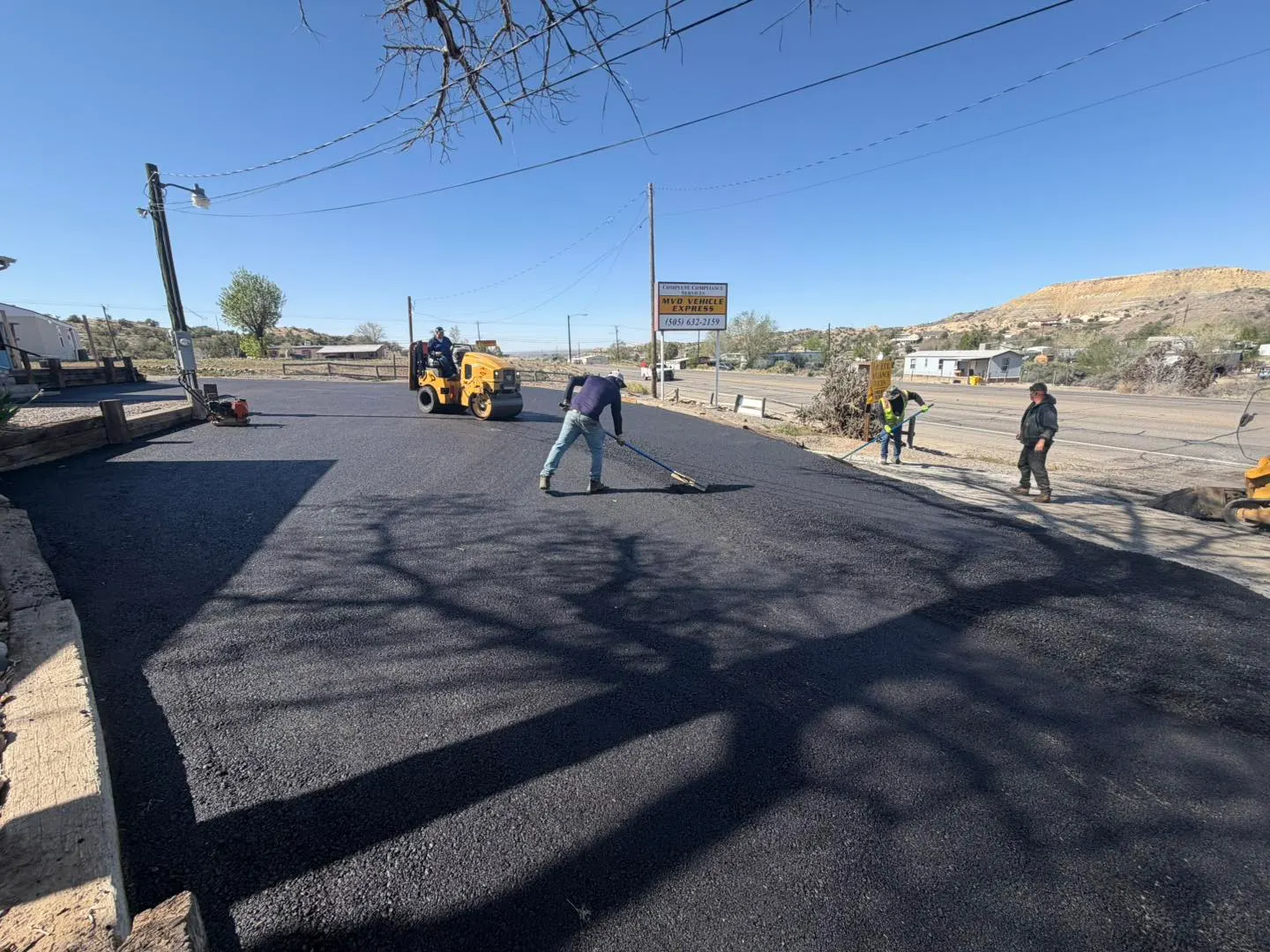
Asphalt driveway cost in Santa Fe, NM depends less on the paving itself and more on what has to happen before the asphalt goes down. Size, tearing out old pavement, the condition of the base, and how water leaves the drive all change the scope. Two driveways of the same length can need very different amounts of work, which is why a fixed number over the phone rarely holds up. Here is what moves an asphalt driveway estimate and how to read one.
What changes the scope of a driveway project
Size is the obvious factor, but shape and access matter just as much. A wide, straight drive that a paver and roller can run end to end goes differently than a narrow one with a curve, a gate or a tight turn at the street. Where equipment can't fit, the work slows down and more of it is done by hand.
Removing existing pavement is the next big swing. Paving a prepared area is simpler than cutting out worn asphalt or concrete, hauling it away and dealing with disposal. If your drive is cracked but the base underneath is sound, resurfacing may be an option instead of a full tear-out, and it is worth asking about.
Finally, ask what the estimate includes at the edges. Transitions where the drive meets the street, a garage slab or a walkway take care to get right, and cleanup should be spelled out so nothing is left to assumption.
Common scope items at a glance
| Factor | What it changes | What to ask |
|---|---|---|
| Size and shape | Material, equipment time and hand work | Are curves and turnarounds included in the measurement? |
| Old pavement removal | Labor, hauling and disposal | Is tear-out and haul-away in the estimate? |
| Base condition | Repair or replacement before paving | How will you check the base, and what if it fails? |
| Drainage | Grading and where water runs | Where will water go after paving? |
| Access | Equipment choice and pace | Can your machines reach the whole drive? |
How the base and drainage affect the work
The base is the compacted layer of gravel or crushed material under the asphalt. It carries the load and spreads it out. Asphalt over a weak base will crack and sink no matter how well the top layer is laid, so base work is where a good estimate earns its keep.
If the base is soft, washed out or damaged, it may need to be repaired or replaced before paving. That adds time and material, and it is usually the line item that surprises people. A contractor who looks at the base before quoting will tell you more than one who quotes from a street view.
Drainage deserves its own conversation. Water that sits on or beside a driveway works its way into the base and breaks it down. Talk through how water will move, especially where the drive meets a building or the street, and whether the grade needs adjusting to send it away. Our asphalt paving work starts with that question because the answer shapes everything under the surface.
New Mexico conditions to consider
Winters across New Mexico can bring snow and freeze-thaw cycles, where water gets into small cracks, freezes, and pries the pavement apart. That affects scheduling. Hot mix asphalt generally needs mild weather to place and compact well, so as nights turn cold in November and December, paving windows can tighten. If you want a new drive before the ground freezes, ask for an estimate early.
Lot conditions matter more than the town name. If your yard is clay or sandy, if the drive climbs to the street, or if runoff from a neighboring slope crosses your property, those details change the base and grading plan. They need to be seen on site, not assumed from an address.
That is why scopes differ even within one service area. A drive in Santa Fe may need a different approach than one in Albuquerque, Rio Rancho or Edgewood, but the reason is the lot, its slope, its soil and its access, not the zip code. When you compare bids, compare what each one covers, not just the bottom line. For homeowners planning a full residential paving project, that comparison is the best protection against surprise add-ons.
What to gather before requesting an estimate
A little preparation gets you a more accurate estimate and a faster visit. Pull together the following:
- Approximate length and width of the driveway, plus any turnaround or parking pad.
- A description of the existing surface: asphalt, concrete, gravel or dirt, and how worn it is.
- Spots where water collects, pavement has settled, or cracks keep returning.
- Anything that limits access, such as a narrow gate, low branches, steep grades or a shared drive.
- Your timing, including whether you hope to finish before winter weather sets in.
Then ask the contractor to break the estimate into base work, removal and paving. When each piece is written out, you can see what you are paying for and what would change if the site turns out different than expected.
We offer free estimates for driveways across New Mexico. Send us your measurements and the problem spots, and we will walk through what the job involves.
Common questions
What affects asphalt driveway cost in Santa Fe, NM?
The biggest drivers are driveway size and access, whether old pavement has to be removed, the condition of the base, and drainage work. Lot conditions like slope and soil can add or remove steps, so an on-site look matters.
Does removing an old driveway add to the estimate?
Usually yes, because tear-out adds labor, hauling and disposal. If the existing base is still sound, resurfacing may avoid some of that, so ask your contractor which option fits your drive.
When should I request an asphalt driveway estimate in New Mexico?
Earlier is better if you want to finish before cold weather. Paving generally needs mild temperatures, and schedules can fill as November and December approach.
Areas we serve
Our services
Have a question about your project? Call (505) 553-8684