
Asphalt Repair for Crumbling Driveways in New Mexico
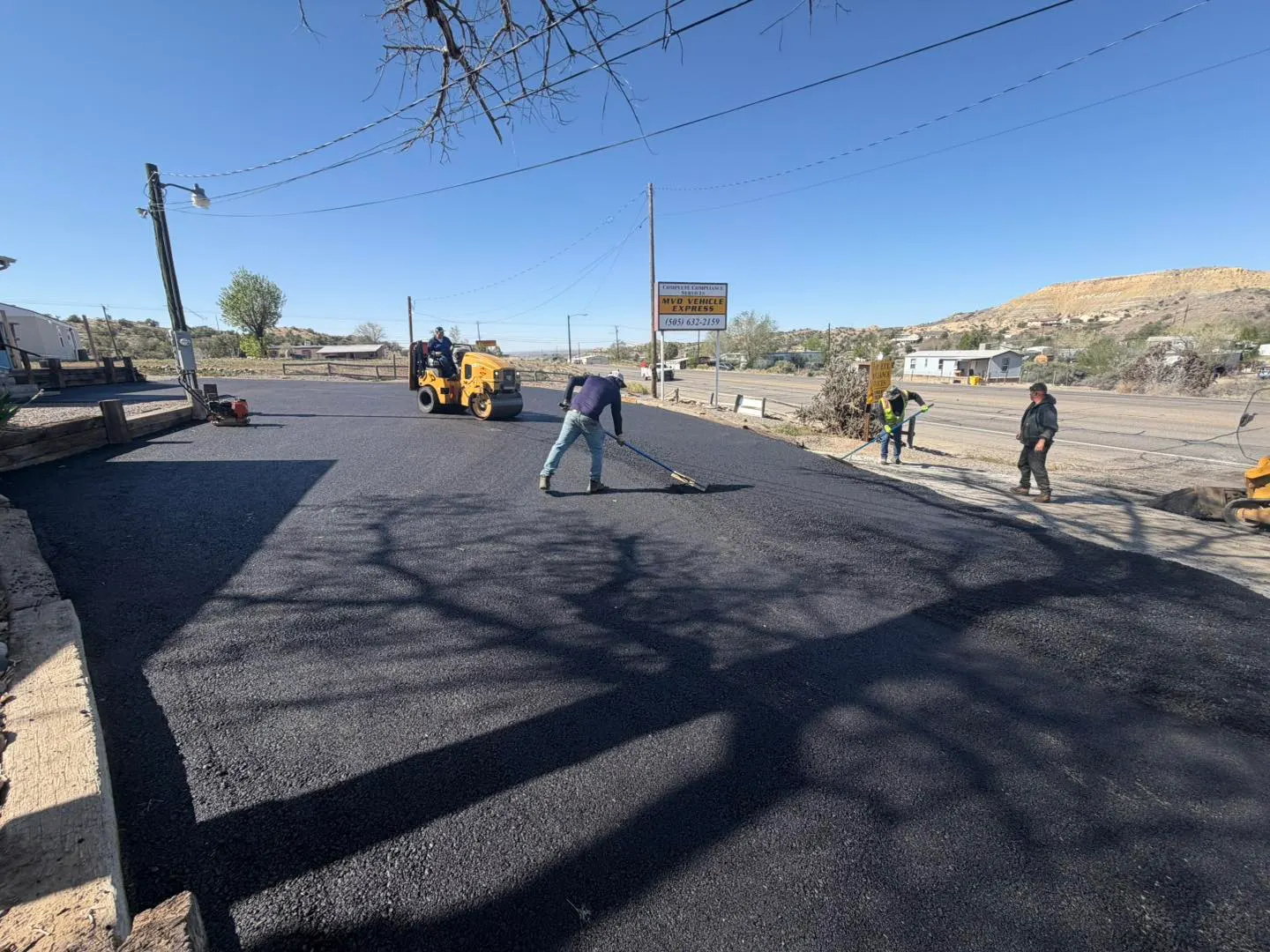
Crumbling asphalt driveway repair starts with finding out how deep the damage goes. In Rio Rancho and across New Mexico, loose stones and a rough, thinning surface are called raveling. A shallow case can often be fixed with asphalt repair, while widespread breakdown may call for resurfacing. A close look at the surface may offer clues about which approach could fit.
How to recognize raveling asphalt
Raveling means the aggregate, the small stones that give asphalt its body, is working loose from the binder (the sticky petroleum glue that holds the mix together). The surface turns rough and pitted, like coarse sandpaper, and you may find loose gravel along the edges or at the foot of the drive.
It looks different from a crack or a pothole. A crack is a line, and a pothole is a hole with a clear edge. Raveling is a texture change across an area, and it tends to spread outward rather than stay in one spot.
| What you see | What it usually means | Likely direction |
|---|---|---|
| Loose small stones, rough surface, area slowly growing | Raveling, the surface is losing aggregate | Repair if shallow, resurfacing if widespread |
| Single line crack with clean edges | Isolated cracking | Crack repair and sealing |
| Hole with broken edges and exposed base | Pothole, damage has reached below the surface | Patching, possibly deeper repair |
| Soft or spongy spots under foot or tires | Possible base problem | Assessment before any surface work |
Walk the drive and note where the loose material collects. Tire paths, the apron near the street and spots where the drive turns are common places for wear to show first. If the rough area is growing from one visit to the next, treat that as a sign to act.
What crumbling can tell you about the pavement
Asphalt breaks down from a mix of causes. Sun and age dry out the binder over time, water gets into the surface and works at it, and traffic grinds on weakened spots. Often more than one is at work.
The key question is whether the problem stays in the surface or reaches the base, the compacted stone layer under the asphalt. Surface-only raveling can respond to repair work. Damage tied to a weak base, such as soft spots, sagging or alligator cracking (a web of interlocking cracks), may not hold if you only patch over it.
Why the answer changes the repair
A repair that fixes a surface problem is not the same job as one that fixes a base problem. Cover a failing base with new asphalt and the new layer tends to fail along with it. That is why a proper assessment matters before anyone quotes a fix.
Repair or resurfacing for crumbling asphalt
Yes, crumbling asphalt can often be resurfaced when the base underneath is still sound. Asphalt resurfacing puts a new layer of asphalt over the old one, usually after cleaning, patching and fixing the worst spots. It may suit a driveway that is rough across most of its area but still firm underfoot.
- Localized raveling: a small area can often be cut out or repaired and blended in.
- Widespread raveling on a firm base: resurfacing is usually the better fit.
- Soft spots, sagging or deep failure: the base may need work before any new surface goes down.
Once a surface is sound, sealcoating can help protect it from water and sun. Sealcoat is a protective coating, not a fix for raveling that is already advanced, so it works best on pavement that is still in decent shape.
What New Mexico weather means for a worn driveway
New Mexico winters can bring snow and freeze-thaw cycles, where daytime melt refreezes overnight. Water that gets into cracks or a rough surface expands as it freezes and adds stress to pavement that is already weak. Intense sun through the long summer also ages the binder, so a drive can arrive at winter already worn.
In October, walk the driveway before colder weather sets in. Look for loose aggregate and for places where water sits after rain or irrigation. Standing water on a weak spot is a common starting point for bigger damage.
Albuquerque, Rio Rancho and Belen
The same checks apply whether your driveway is in Albuquerque or Belen. Conditions vary from one lot to the next. If your drive sits on a slope, collects runoff or crosses an area with clay soil, water may play a larger role in how it wears. An assessment can help clarify conditions on your property.
What to do when you find crumbling asphalt
- Mark the affected area with chalk and take a few notes on its size.
- Check whether the damage is shallow or deeper, and whether it is spreading.
- Press on any suspect areas and note soft spots or sagging.
- Watch where water goes after rain and write down where it pools.
- Ask for an assessment that says plainly whether repair or resurfacing fits.
Those notes make the conversation with a contractor much more useful. Avoid pouring a topcoat or sealer over loose material, because loose stones may keep the coating from holding up.
We offer free estimates on driveway repair and resurfacing across the area. Include notes on where the damage is and where water sits when requesting an estimate.
Common questions
What causes an asphalt driveway to crumble?
Most often it is aging binder, water getting into the surface and traffic wearing on weakened spots. Poor compaction or a weak base can speed it up, which is why the cause matters before you choose a fix.
Can I fix raveling myself?
Loose stones can be swept up, but a lasting fix needs the surface cleaned and bonded properly. Pouring sealer over loose aggregate usually does not hold, so have the area assessed first.
Should I repair a crumbling driveway before winter in New Mexico?
It helps to deal with loose aggregate and low spots before freeze-thaw weather, since water in damaged areas can add stress as it freezes. Checking in October may leave time to schedule work before colder weather.
Areas we serve
Our services
Have a question about your project? Call (505) 553-8684